
Ceramic water filter: how does it really work?
Behind its smooth surface, the ceramic filter is a genuine 0.5 micron physical barrier. Here is how it transforms tap water.
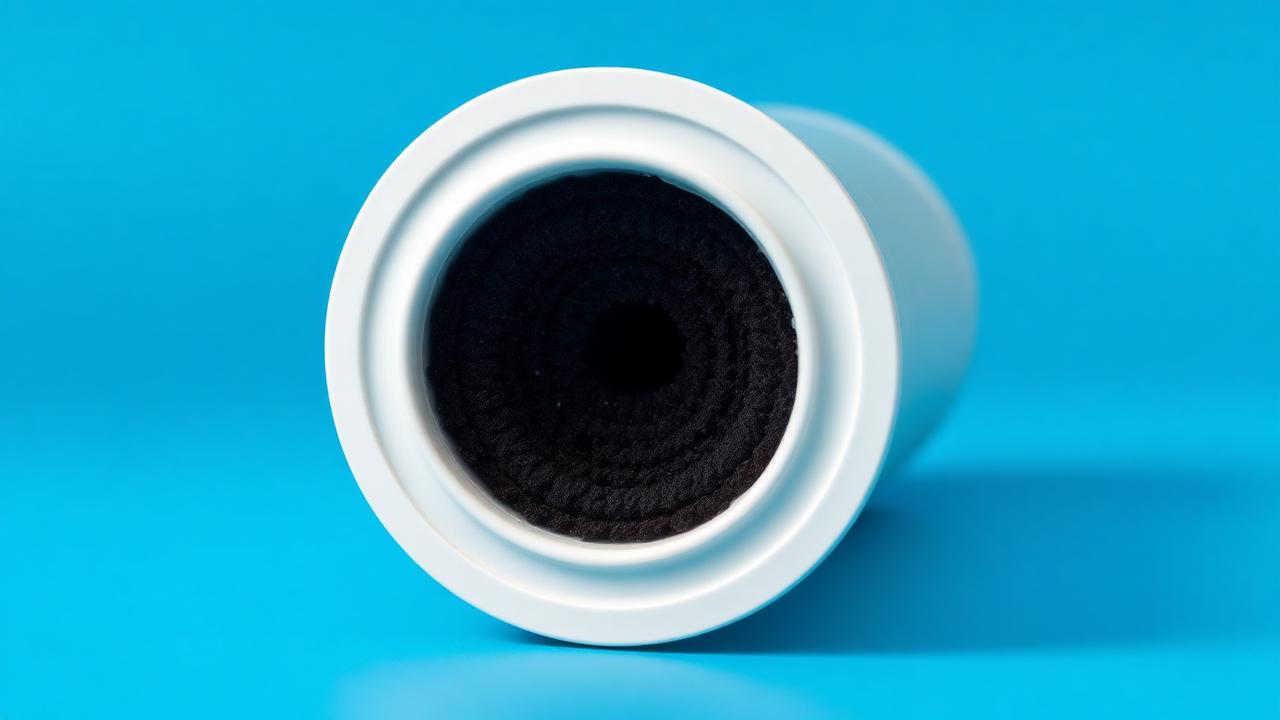
Ceramic filtration has existed since the 19th century — British engineer Henry Doulton laid the groundwork in 1827. Today it is one of the most effective technologies for treating water directly at the tap.
The principle: 0.5 micron porosity
The ceramic cartridge is made of diatomaceous earth sintered at high temperature. Its porous structure lets water molecules through but blocks anything larger than 0.5 micrometres: sediment, rust particles, parasitic cysts, and even some bacteria such as E. coli.
The role of activated carbon
At the heart of the ceramic sits a core of activated carbon, obtained from carbonised coconut shells. This carbon retains, by adsorption:
- Residual chlorine and chloramines (responsible for the swimming-pool taste)
- Volatile organic compounds (VOCs)
- Certain pesticides and pharmaceutical residues
- Microplastics down to 1 micron
What the filter does not do
In all honesty: a ceramic tap filter removes neither nitrates, nor dissolved heavy metals, nor dissolved limescale. Those specific problems require other technologies (reverse osmosis, ion exchange). But for 95% of everyday needs in Switzerland, ceramic plus activated carbon is more than enough.
Maintenance and lifespan
The cartridge is cleaned under running water with a soft brush. A standard cartridge filters around 6,000 litres, which is 3 to 6 months for a family. No electricity, no wasted water, no plastic thrown away every month.
Ready to taste the difference?
Discover the ClearifyWater ceramic filter — fitted in 5 minutes, customer support 6 days a week.
See the filter